The independent appliance repair shop across the Northeast
When the Oven Lies About Its Temperature
If your oven runs hot or cold, we fix that, and you can check a few things first. Cookies burn on the bottom in 9 minutes, or the roast sits pale after an hour, and the dial says 350 while the oven does whatever it wants. Temperature drift is one of the most common calls we take, and it usually comes down to a handful of parts. Here's what's happening inside, and what to look at before calling us.
Call (888) 826-9217- A real person answers
- Open 7 days
- Written quote before work starts
Taking calls until 5:00 PM ET
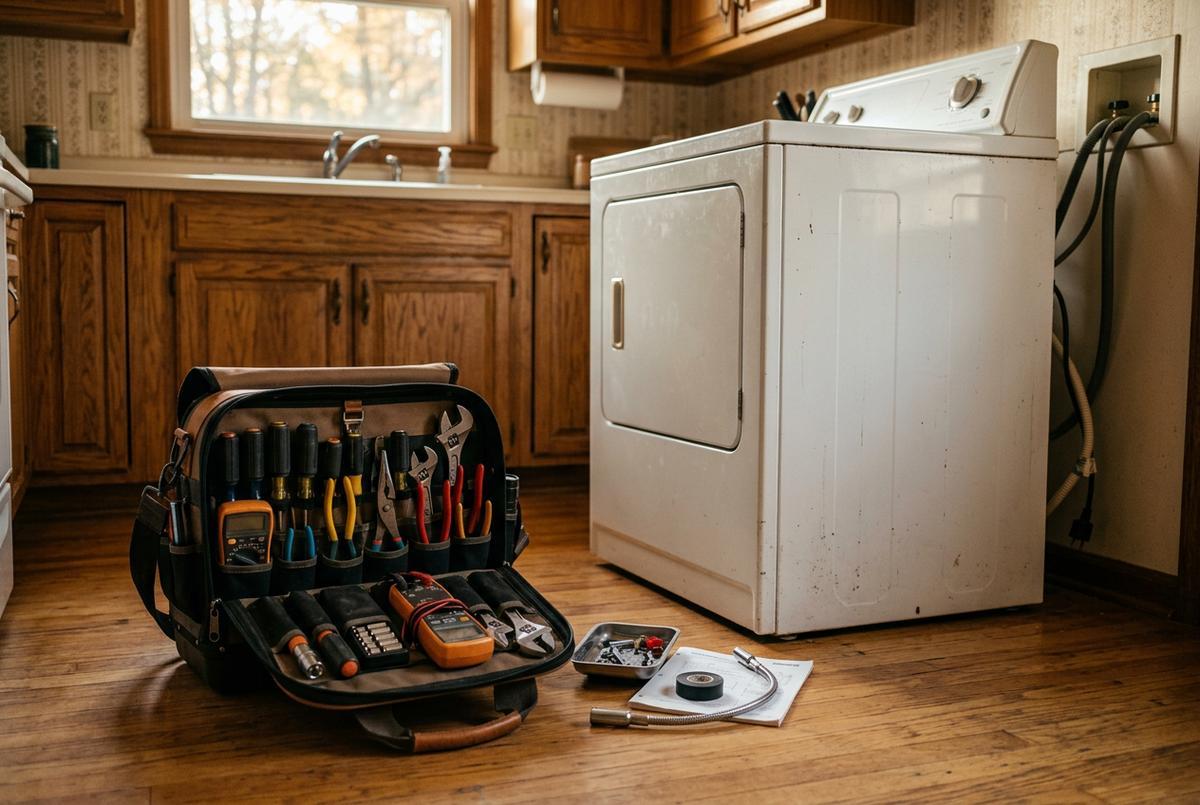
From the technicians at Elite AR
What "running hot or cold" actually means
An oven doesn't hold one steady temperature. It cycles. The burner or element kicks on, overshoots a little, shuts off, drifts down, kicks on again. A healthy oven swings maybe 20 to 25 degrees around your setpoint and you never notice, because the average is right. Drift means the average itself is off. Set 350, get a real 310 or a real 400. Baked goods tell you first, since cakes and breads care about actual heat and not the number on the display. Roasts and casseroles hide the problem longer. If timing changed slowly over months, that's drift. Changed overnight? Something failed.
Start with calibration and habits
Do the cheap check first. Buy a standalone oven thermometer, the dial kind that hangs on a rack. Put it in the middle, preheat to 350, and wait a full 20 minutes past the beep. Most ovens beep before they're truly stable, especially older ones in the pre-war buildings we work in around Fairfield County. Read it, then read it again ten minutes later and average the two. If you're off by 25 degrees or less, many ovens let you adjust calibration through the control panel, so check your manual under "oven temp adjust." Also, stop opening the door to peek. Every look dumps heat. A pizza stone left on a lower rack changes how the whole cavity heats, too.
The sensor and the thermostat
Most electric ovens have a thin metal probe sticking into the cavity, usually upper left rear. That's the temperature sensor, and it reports back to the control board. When it drifts out of spec, the board gets bad information and heats to the wrong target, often getting gradually worse. That matches the "it used to be fine" story we hear constantly. Older gas ranges use a capillary thermostat instead: a bulb clipped inside the cavity with a thin tube running to the dial. If that bulb comes loose from its clip and touches the wall, readings go haywire. Look at the sensor all you want. Don't bend it, don't pull it, don't unscrew anything.
Heating elements, igniters, and door seals
An electric bake element that's blistered or has a dull spot is putting out less heat than it should, and you may see it glowing unevenly. That's a look-only check. Never touch an element, hot or cold, with the oven powered. On gas ovens, a weak igniter is the classic slow-heat cause. It has to glow hot enough to open the gas valve, and as it ages it takes longer, so the oven runs cool and cycles badly. That's technician work, not homeowner work. Door gaskets matter too. Run your hand around the closed door edge and feel for escaping heat, because a torn or flattened gasket bleeds temperature all day.
What we do that you can't from the kitchen
We bring a calibrated thermocouple and log actual cavity temperature through several full cycles instead of one spot reading. That shows us whether the oven overshoots, undershoots, or never reaches setpoint at all, and those are different problems with different fixes. We meter the sensor's resistance cold and compare it to the manufacturer's spec chart, which tells us in a minute whether the sensor or the control board is lying. On gas, we check igniter draw. We also look at what homeowners skip: convection fan operation, blocked vents, a rack sitting in a spot that starves the element. Call us and tell us what you baked and how it came out. That detail helps.
When the Oven Lies About Its Temperature — what people ask
Can I just set my oven 25 degrees higher and live with it?
For roasting, often yes. For baking, no, because the swing pattern is usually off too, not just the average. And a drifting sensor keeps drifting, so your workaround stops working in a few months.
Why does my new oven bake worse than my old one?
Newer ovens preheat faster and use thinner insulation with tighter cycling. The beep often sounds before the cavity walls are saturated with heat. Wait an extra 15 to 20 minutes before loading and compare results.
Does a self-clean cycle damage the temperature sensor?
It can stress it. Self-clean runs the cavity extremely hot, which is hard on sensors, gaskets, and control boards. If your oven started reading wrong right after a clean cycle, mention that when you call.
How it works
- Step 1
Tell us the symptom
Call us or fill out the form and describe what you hear, smell or see. Brand and rough age help. We ask a few questions first so the tech shows up with the likely parts already on the truck.
- Step 2
We come look
Pick a window that works for you. The tech tests the machine and checks power, water and drainage, then tells you what failed in plain words. No jargon. No guessing out loud at your kitchen table.
- Step 3
Repair or straight answer
Most jobs finish on the same visit. If a part has to be ordered, we tell you what it is and why. And if the unit isn't worth fixing, we say that, then you decide.
- A real person answers
- Open 7 days
- Written quote before work starts
Why homeowners call us
- Old houses don't scare usRowhouse kitchens, narrow cellar stairs, stacked units jammed into closets. We've pulled machines through doorways built long before these appliances existed. We protect floors and trim, and everything goes back where it stood.
- Symptom-first diagnosisA dryer that runs cold and a dryer that trips the breaker are two different problems. We test before we replace. That keeps us from swapping out good parts and handing you a bill for nothing.
- Independent, not a brand agentWe repair all major brands and answer to no manufacturer. So we recommend the fix that makes sense for your machine and your budget, and that includes telling you when replacement is the smarter move.
- All major brands, gas & electricIndependent service on Whirlpool, LG, Samsung, GE, Maytag, Bosch, KitchenAid and the rest.
- Straight answersNot worth fixing? We say that out loud, and often it saves you the visit fee.
About this guide
Safe checks done and it still misbehaves? That's a real fault
Describe what you found and we'll take it from there. Booking takes about a minute.
- A real person answers
- Open 7 days
- Written quotes
- All major brands
- Gas & electric
Rather not call? Get a free quote →