The independent appliance repair shop across the Northeast
Dryer Vent Cleaning & Repair — Book a Visit Today
We clean and repair dryer vent ducts throughout the Northeast, and the fix usually starts behind the machine. Lint doesn't stay in the trap. It packs into the duct, and a clogged duct turns a 40-minute dry cycle into three. In older Northeast housing stock the run is often long, crushed behind a wall, or vented through a basement joist bay with foil hose sagging full of debris. Damp clothes, a hot laundry room, a burning smell, those point at the duct and not the machine. On a visit we open the connection, snake and vacuum the full run, check the outside flap, reseat or replace crushed transition hose, then verify airflow at the hood before we pack up. Rigid metal where code wants it. Call us and tell us how long your cycles take now.
Call (888) 826-9217- A real person answers
- Open 7 days
- Written quote before work starts
Taking calls until 5:00 PM ET
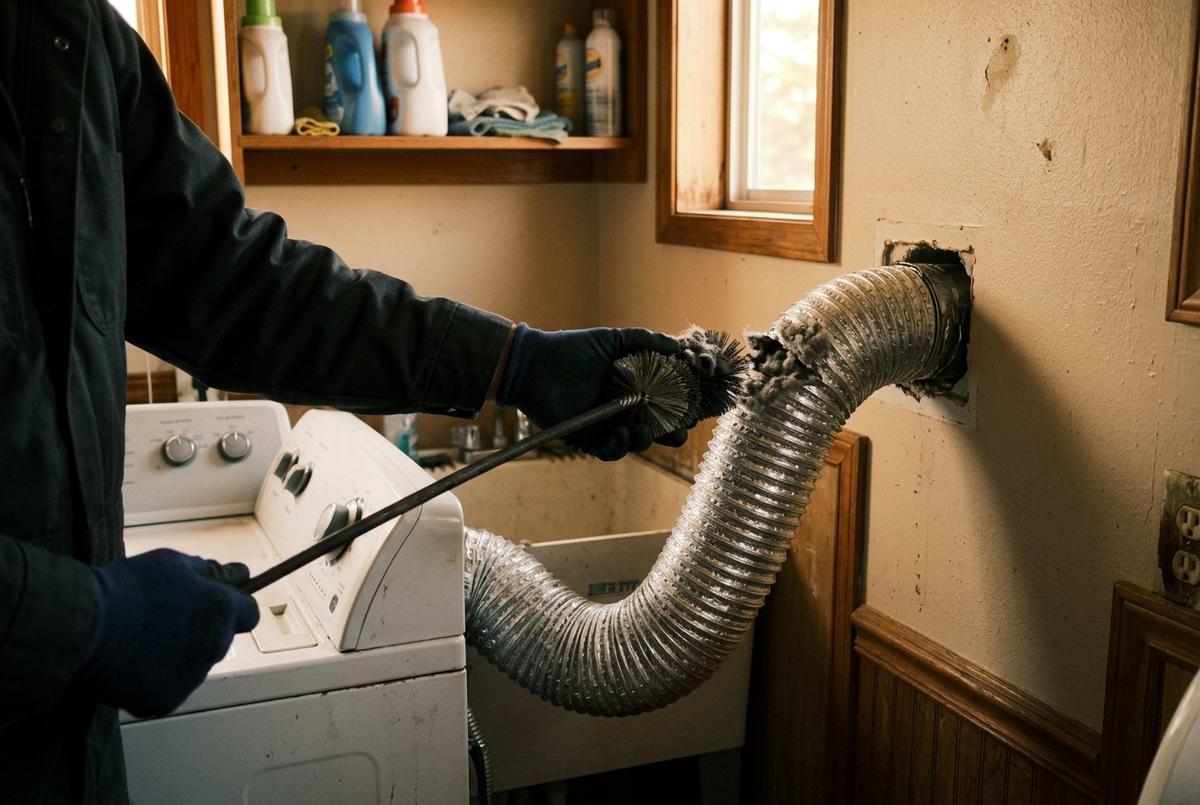
The dryer vent cleaning & symptoms we hear most
- "Takes three cycles to dry one load" Restricted or fully blocked duct run
- "The laundry room gets steamy and hot" Duct disconnected and venting indoors, or leaking joints
- "I smell something burning when it runs" Lint packed against the heater or blower housing. Stop using it
- "Outside flap never opens anymore" Blocked hood, bird nest, or collapsed transition hose
- "Clothes come out hot but still damp" Weak exhaust airflow leaving moisture in the drum
Safe things to check first
Worth a look before you call — sometimes it saves you the visit.
- 1Pull the dryer out a foot and look for a foil hose that's crushed, kinked, or torn loose at either end.
- 2Go outside while the dryer runs and feel whether the vent hood is pushing warm air.
- 3Clear the lint screen, then hold it under running water. If the water beads on top, fabric softener film is choking it.
- 4Check the vent hood for a bird nest, dryer sheet buildup, or a flap stuck shut with lint.
How an independent local shop compares
| Elite AR | Big-box repair chains | Handyman listings | |
|---|---|---|---|
| You approve a written quote first | ✓ | ✕ | ✕ |
| A real person answers, 7 days a week | ✓ | ✕ | ✓ |
| Gas and electric, all major brands | ✓ | ✓ | ✕ |
| No manufacturer targets to hit | ✓ | ✕ | ✓ |
| Crews familiar with homes like yours | ✓ | ✕ | ✓ |
What homeowners say after the visit
“Our cooktop had one dead burner for a year. One visit, all five working. Should have called long ago.”
Tess G.Toms River, NJ“They handled the warranty paperwork questions I could not figure out, then did the repair after it lapsed.”
Hank M.Nashua, NH“Same-week slot, clear arrival window, text when the tech was twenty minutes out.”
Ivy N.Brooklyn, NYDryer Vent Cleaning & Repair — quick answers
How often should the vent be cleaned?
Once a year covers most households. Go more often with a long duct run, several kids' worth of laundry, or a pet that sheds. If cycle times creep up before the year is out, schedule sooner.
Is a clogged dryer vent actually dangerous?
Yes. Packed lint is fuel, and blocked exhaust makes the dryer run hotter than it was designed to. Gas dryers can also push combustion byproducts back into the room. That's why we check the full run and not just the first few feet.
Can I use the flexible foil hose behind the dryer?
Only short, listed transition hose belongs there, and it can't be crushed against the wall. Inside walls and joists, rigid metal duct is what holds up. We swap out plastic or damaged foil when we find it.
Do you clean vents that run up through the roof?
Often, yes. Long vertical runs collect the most lint, so they get brushed from the accessible end with a vacuum pulling the debris out. We'll look at your setup and tell you straight if it needs a roof specialist instead.
Will cleaning the vent fix my drying problem for good?
It fixes it when airflow was the cause, which it usually is. If cycles stay long after the duct is clear, the trouble is inside the machine: a weak heater, a bad thermostat, a worn blower wheel. We diagnose both.
What if the duct is crushed inside a wall?
Happens a lot in older homes and tight basements. We find the pinch point, then talk through options. Reroute a shorter path, replace the damaged section, or move the exit. You decide before any cutting starts.
How it works
- Step 1
Tell us the symptom
Call us or fill out the form and describe what you hear, smell or see. Brand and rough age help. We ask a few questions first so the tech shows up with the likely parts already on the truck.
- Step 2
We come look
Pick a window that works for you. The tech tests the machine and checks power, water and drainage, then tells you what failed in plain words. No jargon. No guessing out loud at your kitchen table.
- Step 3
Repair or straight answer
Most jobs finish on the same visit. If a part has to be ordered, we tell you what it is and why. And if the unit isn't worth fixing, we say that, then you decide.
- A real person answers
- Open 7 days
- Written quote before work starts
Why homeowners call us
- Old houses don't scare usRowhouse kitchens, narrow cellar stairs, stacked units jammed into closets. We've pulled machines through doorways built long before these appliances existed. We protect floors and trim, and everything goes back where it stood.
- Symptom-first diagnosisA dryer that runs cold and a dryer that trips the breaker are two different problems. We test before we replace. That keeps us from swapping out good parts and handing you a bill for nothing.
- Independent, not a brand agentWe repair all major brands and answer to no manufacturer. So we recommend the fix that makes sense for your machine and your budget, and that includes telling you when replacement is the smarter move.
- All major brands, gas & electricIndependent service on Whirlpool, LG, Samsung, GE, Maytag, Bosch, KitchenAid and the rest.
- Straight answersNot worth fixing? We say that out loud, and often it saves you the visit fee.
Dryer Vent Cleaning & Repair
Small faults become big ones on a schedule of their own
Describe the symptoms and we'll book the visit — takes about a minute.
- A real person answers
- Open 7 days
- Written quotes
- All major brands
- Gas & electric
Rather not call? Get a free quote →